Data Acquisition for Flying Cars – aka Personal Drones or eVTOL Aircrafts | ACME Case Study
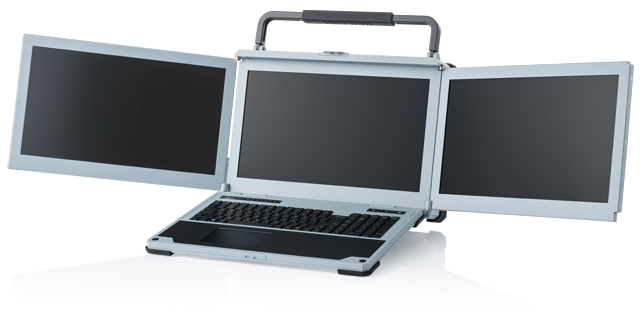
Data Acquisition for Flying Cars – aka Personal Drones or eVTOL Aircrafts case study showing how ACME rugged portable workstations support deployable computing, field operations and mission-critical workflows. The case study explains the application context, deployment challenge and the role of ACME portable hardware as part of an integrated solution.
Personal aviation is soon to become a thing – at least for the well-heeled technocrat. In a few years, it may even be possible to commute in a flying “car” (assuming we must still go to the office!). To be fair, civilian electric vertical takeoff and landing (eVTOL) aircrafts are likely to have applications beyond personal sightseeing. Designed for urban air mobility, these eVTOL aircrafts can be used for air taxi, delivery, and recreation. There are also less frivolous uses, such as medical assistance, search and rescue, cargo, oil, farming, and military.
The eVTOL industry has seen heavy investments by Toyota, Uber, Baillie Gifford (the second largest investor in Tesla), and multiple startups. Major suppliers, such as BAE systems and Honeywell, are also anticipating commercial flights by 2025. The development of components and systems for the diverse and impending ecosystems of advanced air mobility is well underway.
Clearly there are safety concerns that need to be addressed as these types of aircraft are generally flown at lower altitudes. While this may sound safer than higher altitudes, it is still dangerous as there is much less time to deploy a parachute or other safety device. As such, there is a ton of development work going into flight control systems, flight testing, ballistic parachutes, air-bag deployment, and failure mode analysis.